If your goal is native-like fluency, which means you're after spontaneous expression and authentic, real conversations, you have to understand one fundamental truth: Native speakers do not listen to your words.
Let that sink in.
They don’t take the words you say and translate them into a set of internal parameters to see if they make sense. You do it...if you still translate in your head. You translate the information you have received, and if the translation makes sense in your native language, you trust the information, the source, and the fact that you received it correctly.
Native speakers listen differently. They don't have a second language to translate into. Most native speakers are monolingual. This means their brain operates on a completely different system than yours.
If you translate what you hear or read into your first language, I understan why. This is your safety net; it’s how you assess whether you actually understood what was said. But because this is your internal process, you unconsciously assume native speakers do the same when you talk to them.
They don’t. They have a visual, experiential processing system. They either see what you say, or they don’t.
This is the core of my method. (If you want to dive deep into the full framework, you can read the foundational article, "Learning a foreign language is not the same as developing spontaneous speaking skills in a foreign language," or explore the method in depth [HERE].
Let that sink in.
They don’t take the words you say and translate them into a set of internal parameters to see if they make sense. You do it...if you still translate in your head. You translate the information you have received, and if the translation makes sense in your native language, you trust the information, the source, and the fact that you received it correctly.
Native speakers listen differently. They don't have a second language to translate into. Most native speakers are monolingual. This means their brain operates on a completely different system than yours.
If you translate what you hear or read into your first language, I understan why. This is your safety net; it’s how you assess whether you actually understood what was said. But because this is your internal process, you unconsciously assume native speakers do the same when you talk to them.
They don’t. They have a visual, experiential processing system. They either see what you say, or they don’t.
This is the core of my method. (If you want to dive deep into the full framework, you can read the foundational article, "Learning a foreign language is not the same as developing spontaneous speaking skills in a foreign language," or explore the method in depth [HERE].
To close the gap between intermediate hesitation and native-level fluency, you must master the two sides of Mental Images:
- Learn to receive them without translating what was said.
- Learn to send them without giving people words you directly translated from your native language.
When you translate thoughts directly, you send the wrong mental images. Translation is misleading because people from different cultural backgrounds imagine completely different things when they hear seemingly identical words.
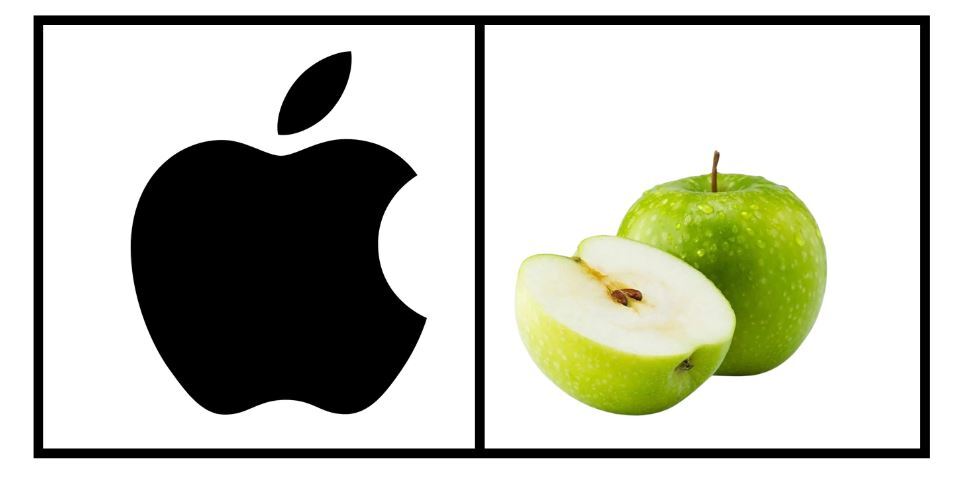
Think about the word Apple. One person sees an iPhone. Another sees a crisp green Granny Smith. Another sees a red apple, and someone else sees an entire orchard.
Or take the word Superhero. If you grew up in America, that word instantly fires up vivid, childhood mental images:Batman, Superman, Catwoman, and stacks of comic books. But if you grew up in a Slavic cultural background or a post-Soviet country, you didn’t have those comic books. The word might trigger absolutely nothing.
The Real Cost of a "Blurry" Conversation
When you send the wrong mental image, your conversation hits a roadblock. Every moment of confusion costs something. It causes a micro-delay. When these delays pile up, the conversation loses its rhythm.
The native speaker has to pause, step out of the flow, and mentally deconstruct what you just said. While their brain is stuck on that puzzle, you keep talking. They lose you, you lose them, and suddenly, connection is replaced by friction. They begin to subconsciously wonder if every interaction with you is going to require extra labor.
To show you exactly how this plays out in real life, let’s look at a few examples from my own recent conversations with my American mentor, and real-time self-correction sessions with my executive clients.
The native speaker has to pause, step out of the flow, and mentally deconstruct what you just said. While their brain is stuck on that puzzle, you keep talking. They lose you, you lose them, and suddenly, connection is replaced by friction. They begin to subconsciously wonder if every interaction with you is going to require extra labor.
To show you exactly how this plays out in real life, let’s look at a few examples from my own recent conversations with my American mentor, and real-time self-correction sessions with my executive clients.
Case Study 1: Conversations with My Mentor
The Cacao vs. Cocoa Confusion:
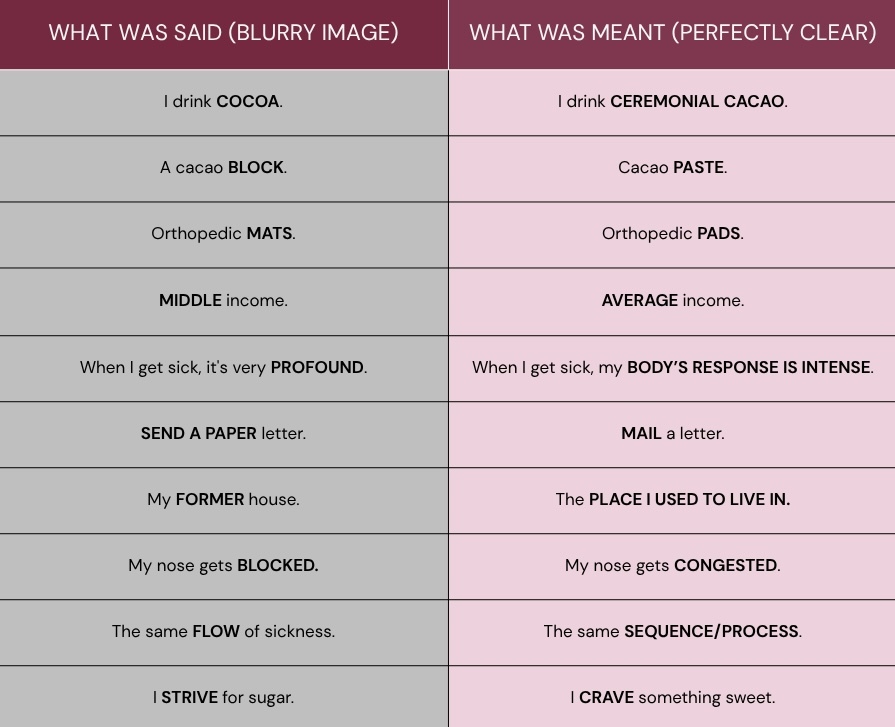
I recently cut out coffee and switched to a pure cacao drink. When telling my friend, I confidently said, "I stopped drinking coffee, and now I drink cocoa." In my native language, there is no distinction—it’s one word for both. But the mental image I sent her was a heavily processed, sugary Swiss Miss powder that’s been sitting on a grocery shelf for months. That’s not what I was drinking.
I saw her eyes cloud over with confusion until she asked, "Do you mean cacao?" I realized the error. I was drinking ceremonial cacao, not cocoa. Later, I tried to explain that I bought a cacao block from Venezuela and Ecuador. Again, confusion. In her experience, that product is categorized as cacao paste. A block sent her brain to a completely unrelated geometric category.
I saw her eyes cloud over with confusion until she asked, "Do you mean cacao?" I realized the error. I was drinking ceremonial cacao, not cocoa. Later, I tried to explain that I bought a cacao block from Venezuela and Ecuador. Again, confusion. In her experience, that product is categorized as cacao paste. A block sent her brain to a completely unrelated geometric category.
The unrefined cacao paste my brain projected:

What she received when I said "hot cocoa" and "hot chocolate" interchangeably:


The drink that I wanted her to see was 'ceremonial cacao', which looks like this:

Mats vs. Pads:
On a video call, she saw my toddler stepping on specialized, textured surfaces designed for pediatric foot development and acupuncture stimulation. I said, "These are his mats." She instantly corrected the image: "Oh, those are the orthopedic pads you were talking about!" To her, a mat is a flat surface (like a yoga mat). A pad implies the therapeutic, structured tool it actually was.
What the word 'mat' sent to her brain:

What the actual therapeutic tool—the 'orthopedic pad'—looks like

Case Study 2: Real-Time Corrections with My Client
In my private coaching, we practice real-time spontaneous expression. My clients talk about whatever is alive for them, and we catch these blurry, unclear, or awkward mental images as they happen. Here is what we uncovered in a recent session:
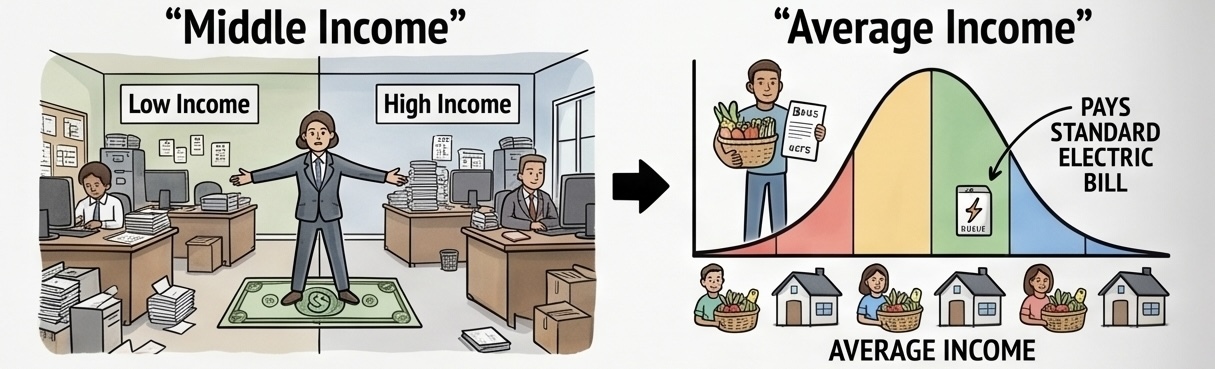
- "Middle Income" vs. "Average Income": My client said someone had a middle income. The word middle triggers a spatial image (the middle of a room, the middle of a trip) because there is a clear beginning and end point. It is not the word that we use to measure finances. What she actually meant was average income.
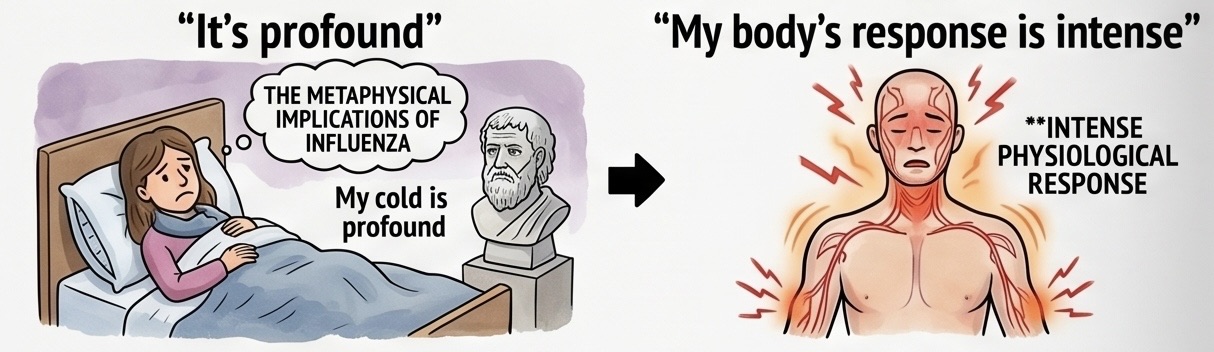
- "It’s very profound" vs. "My body's response is intense": She said, “When I get sick, it’s very profound.” Grammatically, it passes. Structurally, it’s a disaster. Profound implies intellectual depth or serious philosophical weight—not a physiological state. Furthermore, by starting with the empty pronoun it, I couldn't see anything. When she changed it to My body, the word profound no longer fit. The accurate image was: “My body’s response is intense” or “My body really suffers.”
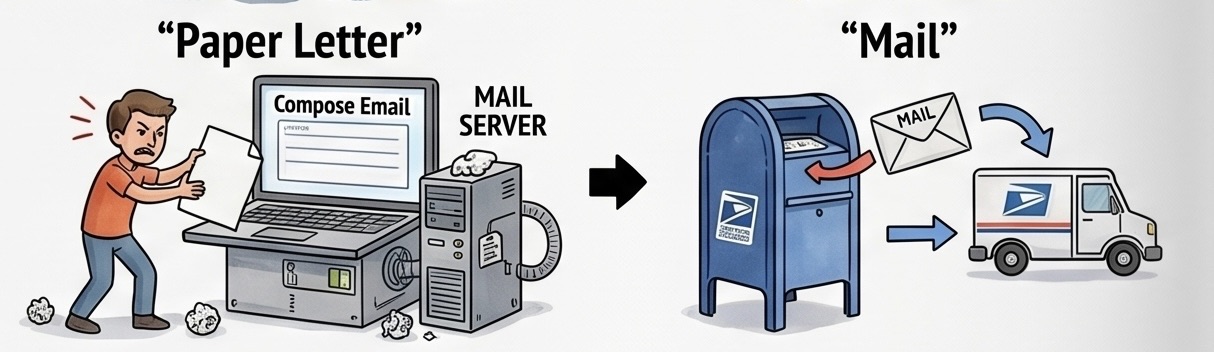
- "Paper Letter" vs. "Mail": She mentioned needing to send a paper letter. When you say paper letter, a native speaker sees a sheet of paper and a letter as separate concepts; it feels redundant and unnatural. If you are physically sending something through the postal service, the verb is simply to mail it.
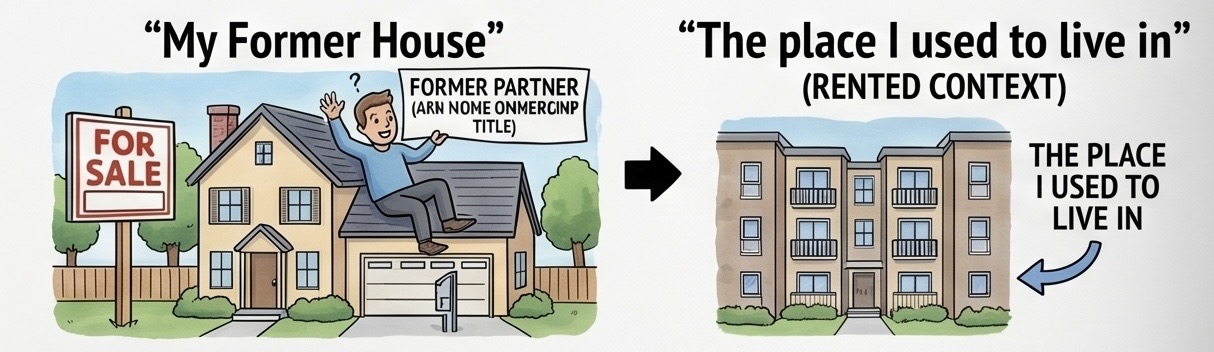
- "My Former House" vs. "The place I used to live in": She said, “My former house was more spacious,” referring to a past rental. We use the former for employers, titles, or partners—not homes. To make a native speaker see the experience of your past living situation without the clunky vocabulary, you use the structural frame: “The place I used to live in.”
- "Blocked Nose" vs. "Congested Nose": She said, “My nose gets blocked.” Sinks get blocked. Roads get blocked by traffic. Financial transactions get blocked by banks. Your respiratory system, however, gets congested.

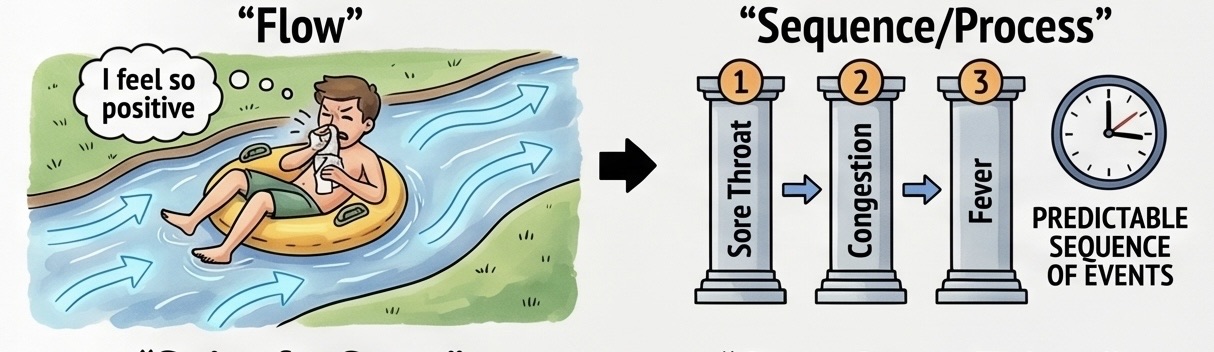
- "Flow" vs. "Sequence/Process": She described the predictable timeline of her illness (sore throat, then congestion, then fever) as a flow. But flow has a positive, effortless connotation (like a flow state). When applied to a cold, it completely mismatches the physical reality. She meant a sequence or process.
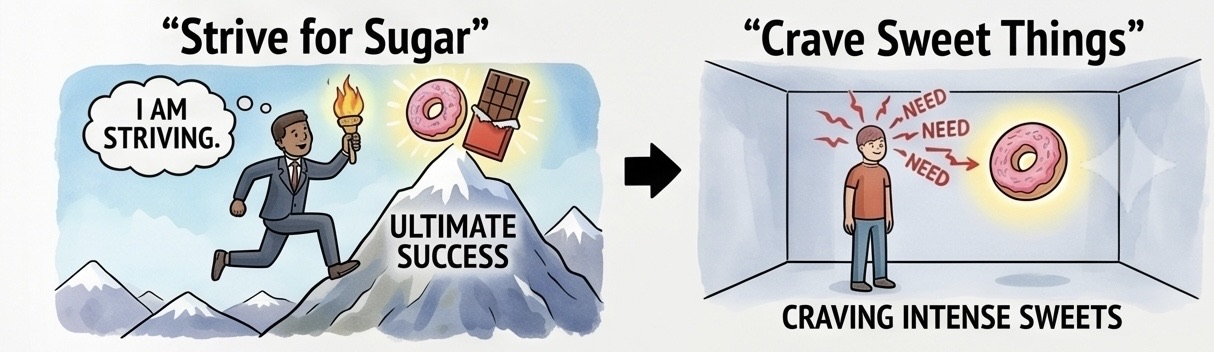
- "Strive for Sugar" vs. "Crave Sweet Things": She said, “I strive for sugar.” You strive for success, ambitions, and high-level achievements. When your body demands glucose, you crave something sweet.
The Clarity Matrix: Blurry vs. Perfectly Clear
Stop Translating. Start Projecting.
If you want to dive deeper into these real-world examples and get daily insights on how to train your brain to think in vivid mental images, I pull back the curtain regularly inside my channel. You can read all the past breakdowns in my Free Telegram Digest [HERE].
If you are ready to stop stumbling over direct translations, eliminate the conversational friction, and finally say exactly what you mean every single time, come join our premium coaching community. Let’s train your spontaneous expression in real time. [Join the Community Here].
If you are ready to stop stumbling over direct translations, eliminate the conversational friction, and finally say exactly what you mean every single time, come join our premium coaching community. Let’s train your spontaneous expression in real time. [Join the Community Here].